
Pain, Numbness, Weakness or Limited Movement?
If any of these are interfering with your life, the next step can begin with understanding what may be causing it.

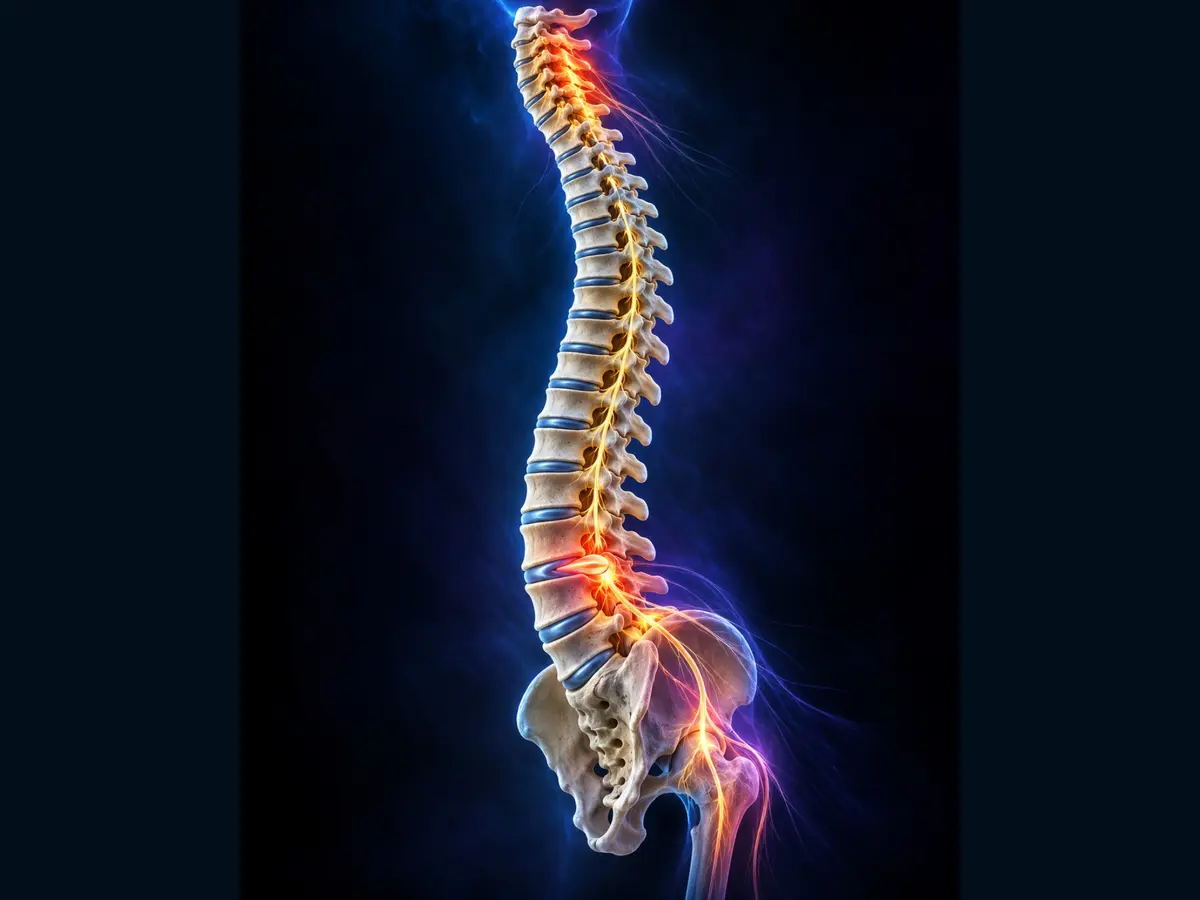
The Spine Does More Than Support the Body.
The spine provides structure while helping protect the neural pathways that communicate with the arms and legs. When a structural problem affects a nerve, symptoms may be felt far from the spine itself.
Start With the Diagnosis.
History, symptom patterns, physical evaluation, prior treatment and appropriate imaging or testing help build a clearer clinical picture.
Treatment follows understanding—not the other way around.
Not Every Patient Requires Surgery.
Nonsurgical approaches may be appropriate depending on diagnosis, symptoms, prior care, health and individual circumstances.
Minimally Invasive Spine Surgery
When surgery is considered, minimally invasive spine surgery is one category of approach. Whether it is suitable depends on the condition, anatomy, overall health and individual goals; it is not appropriate for every patient.
Advanced & Complex Spine Surgery
Some complex spine conditions require detailed evaluation and careful planning. A practitioner can explain whether advanced surgical care may be appropriate; many patients do not need surgery.
Why Can a Spine Problem Feel Neurological?
A structural issue can involve a nerve and change sensation, strength or movement.
A Symptom May Travel Along a Nerve Pathway.
This visualization helps introduce how a change near the lumbar spine may be experienced through the hip and leg. It is educational—not a diagnosis—and gives patients a clearer way to describe what they are feeling.
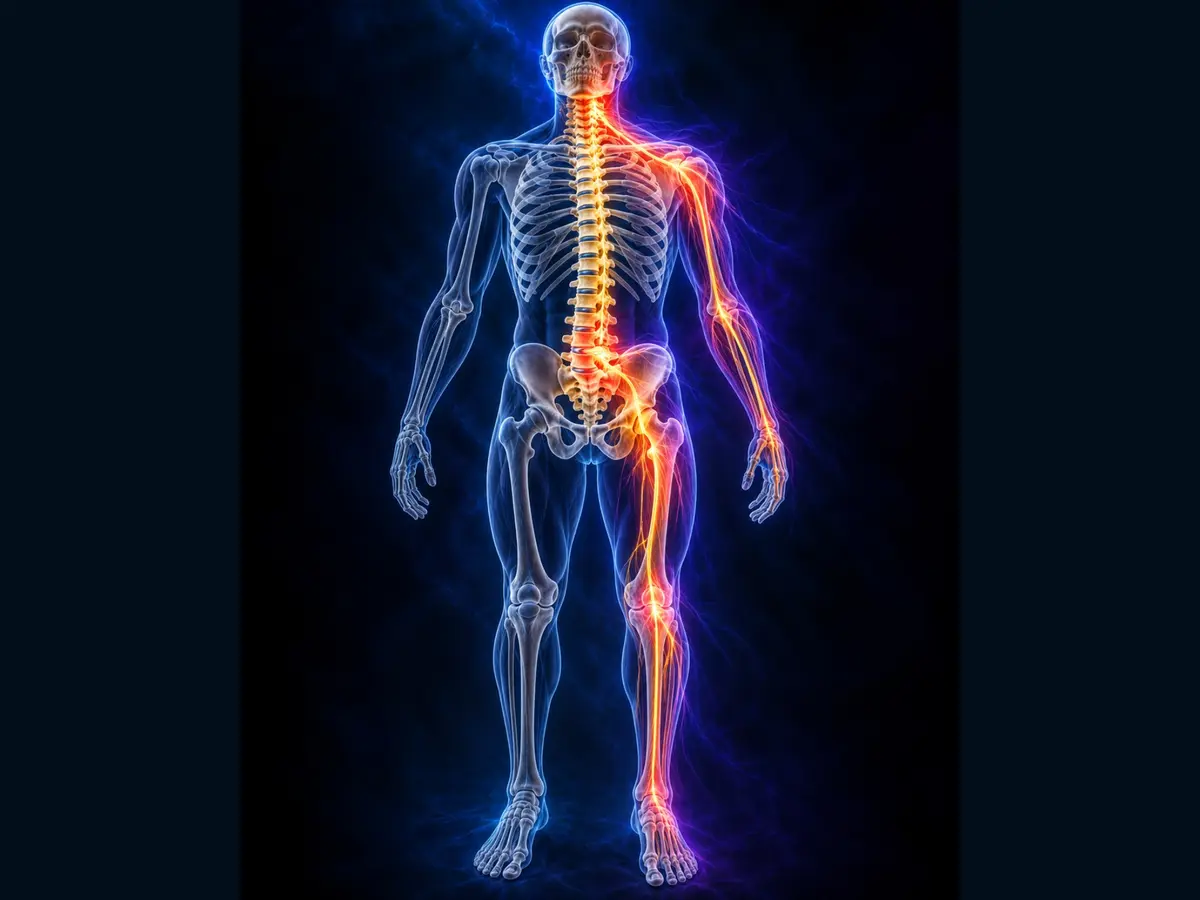
When Something Isn't Working the Way It Should.
Spinal structure, nerves, joints and movement work together. Select an area below to explore common problem patterns and how they may connect to what you're experiencing.
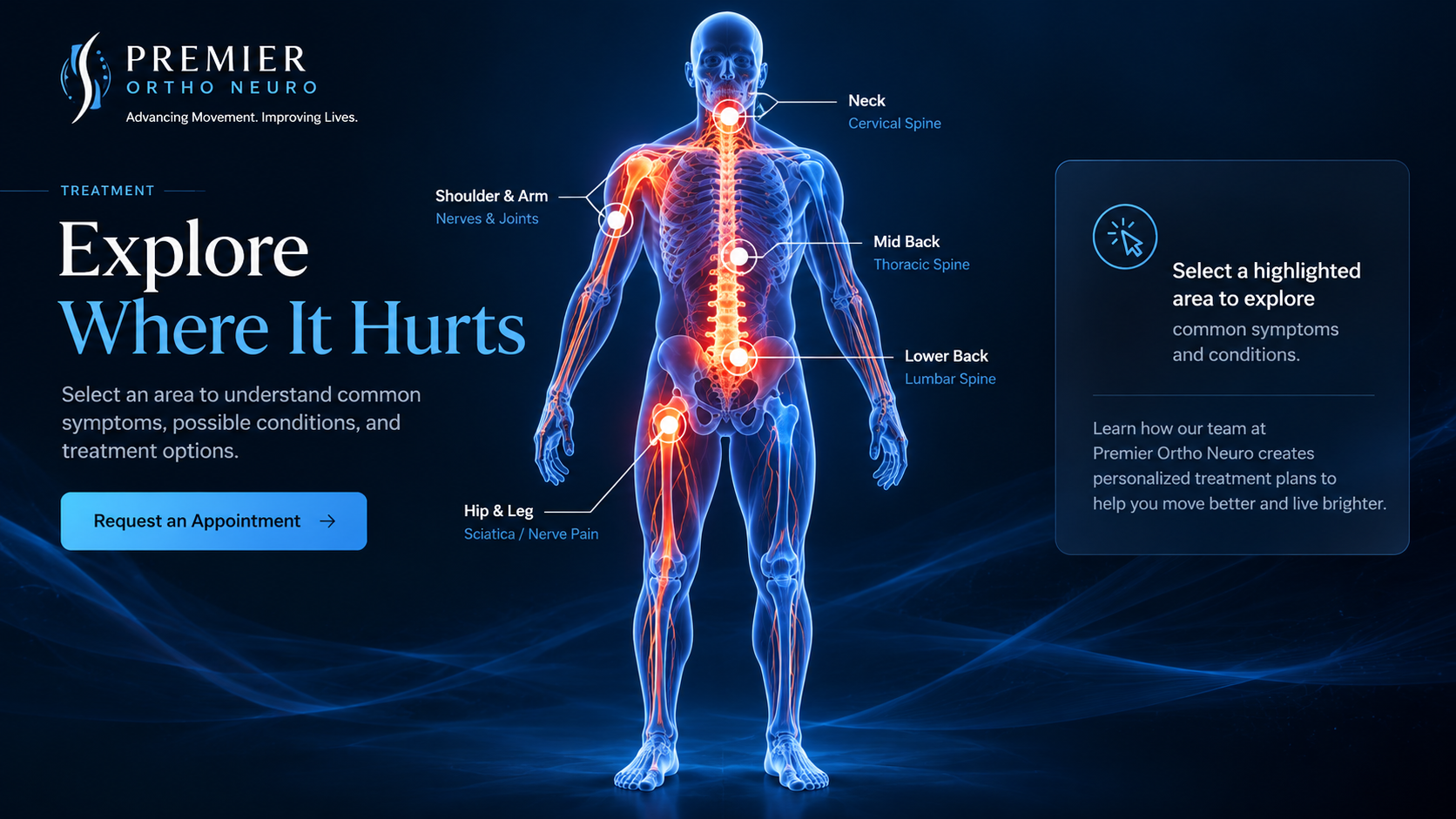
Select a Highlighted Area
Choose a region on the body to explore common symptoms and conditions that may be evaluated.
Neck & Cervical Spine Conditions
Neck symptoms can involve discs, joints and nerve roots, including pain that travels toward the shoulder or arm.
Shoulder & Upper Extremity Conditions
Shoulder and arm symptoms can arise from the joint itself or from nerves traveling from the cervical spine.
Thoracic & Mid-Back Conditions
The thoracic spine provides stability and protects the spinal cord while supporting posture and movement.
Lumbar Spine & Lower-Back Conditions
Lower-back symptoms may involve discs, joints, vertebrae or nearby nerve structures.
Hip, Leg & Sciatic Nerve Conditions
Irritation or compression in the lumbar spine, pelvis or hip can contribute to symptoms that travel into the leg.
Understand First. Decide Together.
Understanding the condition and available options is part of making an informed treatment decision.